A History of Classical Music (The Women-Only Version)


A composer with a desire for an audience has to be in possession of skills that have, on their surface, very little to do with music. He (it was almost always a he) needs to be capable of self-promotion, of fund-raising, of a kind of confidence that makes others follow instructions. Arguably, it’s these adjacent abilities that have been least encouraged in female composers. Then there is the notion, intractable for centuries, that women could perhaps be talented of body — with nimble fingers and a bell-like voice — but never of mind, which is, of course, where composition originates.

Even if they’ve hardly ended up household names, the women in this alternative history of composing are, quite frankly, anomalies: people for whom ambition and talent coincided with privilege and pedigree. Many had musically influential or well-connected fathers and husbands; others had the support of powerful nobles. Changes in geopolitics played a role in their success, as did quirks of history. As Anna Beer writes in “Sounds and Sweet Airs: The Forgotten Women of Classical Music”: “They did not seek out, or seek to create, a female tradition, nor did they wait for a female teacher or mentor. They invariably worked with, and within, a male-dominated musical culture.”

To read about their lives, and to listen to their music, is to mentally catalog everything that went right for them — and to imagine all the forgotten women for whom it must have gone wrong.

 Check out this  playlist of  female composers, who are often overlooked.


The Soul’s Struggle

Hildegard of Bingen, circa 1151


Hulton Archive/Getty Images

By the natural light from a single window, Hildegard of Bingen wrote books on medicine, botany and theology, and corresponded with penitents and popes. Born around 1098 and one of the first known composers in the Western tradition, she spent most of her life sequestered in a remote Rhineland monastery. Dozens of her compositions survive, all with original text, along with her magnum opus: a hypnotic liturgical drama called “Ordo Virtutum,” which tells the story of a struggle for a human soul between the Virtues and the Devil.


Hildegard experienced visions from the time she was a young girl — Oliver Sacks speculated that she suffered from blinding migraines — and people across medieval Europe knew her as a prophet, “the Sibyl of the Rhine.” She claimed to have been uneducated, and her letters suggest a compositional practice inspired only by faith. “Hearing earthly music,” she wrote, “enables humans to to recall their former state.” Her work remained cloistered, though; it’s believed that none of it was ever heard outside her convent in her lifetime.


For a Court of Women

Francesca Caccini, 1625


February in Florence was Carnival season, and in 1625 the Medici court was celebrating a recent victory against the overextended Ottoman Empire, welcoming a visit from the Crown Prince Wladyslaw IV Vasa of Poland with opulent feasts and extravagant ceremonies. Francesca Caccini, a 36-year-old composer, was the architect of the day’s signature entertainment: “La Liberazione di Ruggiero Dall’isola d’Alcina,” a comic opera in four scenes, complete with dancing horses and other visual pyrotechnics and a fantastical plot involving warring and seductive sorceresses.

With its juxtaposed arias, canzonets and madrigals, the gynocentric and multifarious opera was the product of a historically exceptional period at the court, dominated first by Caccini’s original patron, Christine de Lorraine, the wife of Ferdinando I de’ Medici, and then by her daughter-in-law, Maria Magdalena of Austria. The original audience for “La Liberazione” was, as the musicologist Suzanne Cusick has written, well prepared to welcome the “representation of a fictional world ruled by exceptional women.”


The Composing Coquette

Barbara Strozzi, 1650s


Like that of many if not most female composers throughout history, Barbara Strozzi’s career was engineered by a man. Her adoptive father, the poet Giulio Strozzi — many assumed Barbara was his illegitimate daughter — organized salons at his Venice home, where he would invite important men to debate philosophical and often prurient topics. Between discussions, the teenage Barbara would perform suggestive musical interludes.

It wasn’t until her 30s that she began to seriously and consistently compose her own music, a professional pivot that can be read as an assertion of autonomy after a lifetime of sexualized manipulation. The music she wrote could be overtly erotic — voices interweaving to a sonic climax — and sometimes misogynistic in its lyrics. It remains uncertain as to whether or not she was ever a courtesan or even a concubine.


Private Performances
and Public Humiliations

Elisabeth Jacquet de la Guerre, 1694

Baptized Élisabeth-Claude Jacquet, the composer now known as Élisabeth Jacquet de la Guerre was born in Paris in 1665 to a family of artisans (her father was a master harpsichord maker) whose craft allowed them access to the French nobility. She was accepted into the court of Louis XIV as a teenager, and her education and musical practice was overseen by Madame de Montespan, the king’s most adored mistress.


As was common with many musicians at the time, Jacquet’s career depended on the whims of her patrons, for whom she performed in mostly private settings. Being at the mercy of a mistress was even more precarious. And by 1694, when Jacquet staged “Céphale et Procris,” her first opera, Madame de Montespan had been replaced by a new, more religious mistress whose conservatism was already influencing the court’s taste. Though Jacquet took the trouble to publish the work, the production itself was performed only five or six times in Paris, to a wan reception. Jacquet’s husband, himself a composer, is said to have met with attendees the day after the premiere, telling them to stifle any criticism. But she never composed another opera.

They Prefer Song

Marianna Martines, 1772

DeAgostini/Getty Images

The English music historian Charles Burney visited Vienna in 1772, and on a Sunday afternoon in September was greeted in a grand home by the Italian librettist Pietro Metastasio. Letters were read aloud, compliments paid to mutual friends; the conversation was pleasant and intriguing.

The tenor of the room shifted with the entrance of a young woman, whom Burney would later describe as “well dressed,” “graceful” and “very elegant.” It was the composer and harpsichordist Marianna Martines, Metastasio’s pupil and protégée, who even as a child was deemed skilled enough to play at the imperial court. The group of men greeted her with great respect, and she proceeded to sing two airs of her own composition. Her performance, Burney would write, surpassed all that he “had been made to expect.”

In his account of the visit, Burney praises Martines’s voice, her timing, her self-presentation. But he expressed concern that the physical demands of composition — the sitting, the neck craning — might mitigate her other talents. “It is a pity,” he wrote, “that her writing should affect her voice.”


Backstage Grandeur

Louise Farrenc, 1850


In the middle of the 19th century, Paris audiences vastly preferred opera to instrumental music. But when Louise Farrenc’s Nonet in E-flat major had its premiere in 1850 — with Joseph Joachim, not yet 20 years old and not yet quite world famous, leading on the violin — the performance was met with ecstatic excitement. Alternating between winds and strings, the work is lively and bright; listeners enjoyed the way in which each instrument is given its own moment to shine.


Eight years earlier, Farrenc had been appointed professor of piano at the Paris Conservatory — one of the first female instrumental professors in Europe — and Farrenc parlayed her newfound public success into a pay raise, demanding that her wages be equal to those of her male colleagues. Her employers agreed, and Farrenc kept the post for another quarter-century. In addition to composing and teaching, she helped her husband, a music scholar and publisher, to research and edit books, including a 23-volume anthology of keyboard masterpieces. She continued the work after he died, organizing talks and concerts to coincide with various publications. Her strategic scholarship — intent on reviving and publicizing works of the past — was unusual at the time, but such behind-the-scenes labor has in fact been a large part of the work women have contributed over the centuries.


Touring and Torment

Clara Schumann, 1837

Hulton Archive/Getty Images

In the winter of 1837, Clara Wieck, a German piano prodigy turned teenage touring virtuoso, came to Vienna to give a series of concerts that lasted through the spring. The shows often sold out; excited crowds grew so congested that the police were called upon; and a torte was named after her.


She was a celebrity. In addition to her work on the piano, she composed music that she would play at each recital — a rarity for both men and women at the time. The fact that she toured at all was in itself somewhat novel. By the 19th century, musicians who once performed privately for their noble employers now gave public concerts to larger, more diverse and more distant audiences, but it was not a tradition friendly to women, for whom a life onstage and constant transit were considered inappropriate if not impossible. Wieck was an exception.
By the time she married her husband, the composer Robert Schumann, and took his name, she was already world famous — and only 20. She continued to perform for decades, through relentless pregnancies and multiple miscarriages. And despite Robert’s nervous breakdowns and possible syphilis infection, she believed his opinion that she should retreat from composing.

“I once believed that I possessed creative talent, but I have given up this idea,” she wrote. “A woman must not desire to compose — there has never yet been one able to do it. Should I expect to be the one?”


The Composer and His Muse: Ludwig Van Beethoven 's Fur Elise and Therese Malfatti


In 1810, Beethoven’s life was marked by an event that caused him much suffering. In the spring of 1809, the forty-year-old composer fell in love with a student – the beautiful eighteen-year-old Therese Malfatti. The composer considered the esteem and devotion Tereza held for him to be love. So confident in his future with this young girl, Beethoven even thought of marriage (in a letter to his good friend Wegeler, he asked for his birth certificate from Bonn required for marriage).

In the spring of 1810 he was invited to the Malfatti household in the Kärntnerstrasse for a soirée being thrown by Therese's father for all the family's friends and business acquaintances.

Beethoven had composed a short piano piece - Bagatelle WoO 59 - for Therese. His plan seems to have been to play it for her in front of the guests and propose marriage to her.

According to Gleichenstein in a letter home to his parents in Freiburg, Signore Malfatti served an exceedingly strong punch at the soirée - and Beethoven drank huge quantities of it.

So drunk was he that he was unable to play the piece, and in no condition to propose anything to anyone. It seems that Therese made him instead write her name on the title page.

He wrote, in almost illegible writing, "Für Therese".


On her death, the original manuscript was found in her effects. It was taken to a music publisher, who immediately recognized the notation as being in Beethoven's hand and decided to publish it posthumously

He published it under the title Bagatelle, but apparently misread the dedication.

"Für Elise" appeared on the top of the title page, and the piece - quite possibly the most famous piano music Beethoven ever composed, probably because practically anyone can play it - has been known by that name ever since.


Listen to the Dr. Fuddle Anthem!

One Note Can Make a Difference!


Lyrics by Warren Woodruff based on the final movement of Beethoven's Waldstein Sonata, Op. 53, arranged by Warren Woodruff and Brianna Spottsville. Performed by Ellie Coe, piano, Carley Vogel, soprano with the Roswell High School Orchestra and the Atlanta Academy of Vocal Arts.


Bach's Forgotten Aria

In May 2005 the Leipzig-based musicologist Michael Maul made a sensational discovery in Weimar. While sifting through the Hergozin Anna Amalia Library, he unearthed the manuscript of a sacred aria by Johann Sebastian Bach which was previously completely unknown. It is the first time since 1935 that a new Bach vocal work has been discovered.

The discovery astonished music scholars. On two nearly forgotten pages of a pile of birthday notes given to an 18th century duke, a young Johann Sebastian Bach wrote an aria in his own hand. Until now, nobody knew that this existed.

There was no previous record of the music, a two-page handwritten aria dated October 1713, when Bach was 28. But the archive has now verified the piece, which had been stashed in a box of birthday cards, as the work of Bach. According to the archive, the composer wrote the work for soprano, strings and basso continuo in honor of the 52nd birthday of Duke Wilhelm Ernst of Saxe-Weimar, whom Bach served as court organist. It is likely that he performed it, and that the duke was pleased: Soon after, Bach became Ernst's concertmaster, and received a raise.


Scholars say the score was something of a departure for Bach, a light strophic aria in which lyrics — in this case, a 12-stanza poem — are sung over fairly constant playing. It is the first vocal music by the Baroque master to be discovered in 70 years. And it missed being destroyed by only months. A fire ravaged the Anna Amalia Library, where Bach's music had been stored in a box along with other birthday wishes for the duke. While many artifacts and documents were lost in the fire, the box had been sent to Leipzig for restoration months earlier.


Read more

"After Michael and I had identified it as Bach's, we opened a very expensive bottle of champagne," Peter Wollny, the archive's head of research, told the Guardian on Monday. "Michael came back from Weimar two weeks ago and said he had found something interesting. We got the microfilm of the score last week. We compared it with Bach's known compositions -- and bingo.

"The last time anything by Bach was discovered was 80 years ago. So far we've only heard it on the computer. But it's a charming little work, written for one singer -- a soprano -- and a harpsichord. There's a little postlude at the end for a string ensemble -- two violins, a viola and a cello. It takes just four or five minutes to play."

The archive has asked British conductor John Eliot Gardiner to present the world premiere and record the aria. Gardiner said that he thought the aria likely came from a longer cantata.

"It is absolutely beautiful," Gardiner told the Guardian on Monday. "So many of Bach's cantatas went missing after he died. His son Wilhelm Friedemann Bach was pretty profligate with his father's stuff. He sold manuscripts off, lost them, used them as firelighters. So when something like this turns up, it is wonderful."

Gardiner described it as "a reflective, meditative, soothing piece, as Bach's church music so often is. It's not going to set the world alight -- enough of Bach's music from this early-to-mid period has survived to give us a sense of his musical personality at that time -- but it's just great to have this, because every one of his cantatas and arias is on a completely different level from all of his contemporaries."

British music critic Tom Service, who has examined the score, wrote in yesterday's Guardian that it is "a charming tune in C major, full of a natural pastoral joy, an appropriate gift for the birthday of his patron in Weimar."

"There's none of the contrapuntal seriousness that you associate with Bach's most involved music," he added. "Instead, this piece reveals an intimate side to the composer."

Read more 


More Greatest Pianists!


There are so many issues involved in choosing the top classical pianists. Should it be based on their technical ability, their reputation or following, the breadth of their repertoire or their improvisation talents? Then there’s the question of whether those pianists who played before we had recording equipment can legitimately be considered since we can’t actually hear their playing to compare it with others. On this last point, it seems entirely justified to do so, particularly in cases where an individual stands out in a period in which we know there were a great number of incredible talents, and if they gained an international reputation long before the time of modern media and communication. Read more

Here are some of the greatest piano icons that ever played!

Vladimir Ashkenazy (1937-)

Ashkenazy is one of the heavyweights of the classical music world. Having been born in Russia he now holds both Icelandic and Swiss citizenship and is still performing as a pianist and conductor around the world. In 1962 he was a joint winner of the International Tchaikovsky Competition (with John Ogden, see below) and the following year he left the USSR to live in London. His vast catalogue of recordings includes the complete piano works of Rachmaninov and Chopin, the complete sonatas of Beethoven, Mozart's piano concertos as well as works by Scriabin, Prokfiev and Brahms. He's worked with all the biggest names of the 20th century including conductors Georg Solti, Zubin Mehta and Bernard Haitink.


Frédéric Chopin (1810-1849) Poland’s most famous composer was also one of the great piano virtuosos of his day. The vast majority of his work was for solo piano and though there are no recordings of him playing (the earliest sound recordings are from the 1860s), one contemporary said: “One may say that Chopin is the creator of a school of piano and a school of composition. In truth, nothing equals the lightness, the sweetness with which the composer preludes on the piano; moreover nothing may be compared to his works full of originality, distinction and grace.”


Myra Hess (1890-1965)

Dame Myra Hess, as she eventually became, is famous not so much for winning a scholarship to the Royal Academy of Music at the age of 12, nor of performing with the legendary conductor Sir Thomas Beecham when she was 17 – but for the series of concerts she gave at the National Gallery during WWII. During the war, London’s music venues were closed to avoid mass casualties if any were hit by bombs. Hess had the idea of using the Gallery to host lunchtime concerts. The series ran for six and a half years and Hess herself performed in 150 of them.


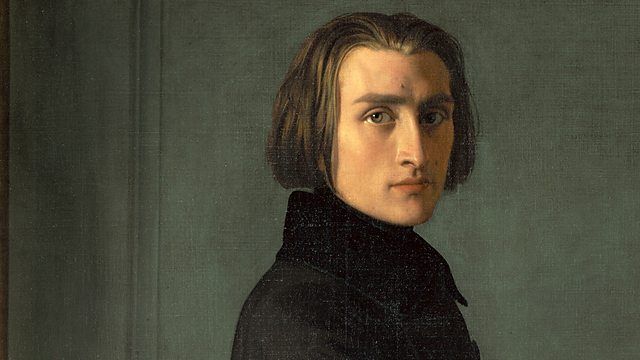
Franz Liszt (1811-1886)

Vying with Chopin for the crown of greatest 19th-century-virtuoso was Franz Liszt, the Hungarian composer, teacher and pianist. Among his best known works are his fiendishly difficult Années de pèlerinage, the Piano Sonata in B minor and his Mephisto Waltz. And as a performer his fame was legendary – there was even a word coined for the frenzy he inspired: Lisztomania.  All eye-witness accounts of Liszt’s playing put him in the very first rank of classical pianists. Over an eight-year period of touring Europe in the early 1840s, he is estimated to have given over 1,000 performances. Part of the reason for his legendary status could be that he retired from performing at the relatively young age of 35 to concentrate on composing.

franz liszt and his women


Clara Schumann (1819-1896)

One of the few female pianists to compete in the largely male world of 19th-century music, Clara was a superstar of her day. Her talents far outshone those of her composer husband Robert. She wrote her own music as well – you can hear an example in the video below.

One critic of the time said: “The appearance of this artist can be regarded as epoch-making… In her creative hands, the most ordinary passage, the most routine motive acquires a significant meaning, a colour, which only those with the most consummate artistry can give.”


Claudio Arrau (1903-1991)

It’s said that this great Chilean pianist could read music before he could read words. It wasn’t long before he was playing works like the virtuosic Transcendental Etudes by Liszt. He’s perhaps best-known for his interpretations of the music of Beethoven. The legendary conductor Colin Davis said of Arrau: “His sound is amazing, and it is entirely his own… His devotion to Liszt is extraordinary. He ennobles that music in a way no one else in the world can.”


Read more

The Composer and His Muse: Beethoven, Julie Guicciardi and Moonlight Sonata

Wood engraving after a painting by Lorenz Vogel (1846-1902).
"Die Entstehung von Beethovens "Mondschein-Sonate" 1896.
Beethoven-Haus Bonn, Bonn © 2016 Beethoven-Haus Bonn)

Julie Guicciardi, as she was named by her family, was born in Przemysl, Galicia in 1782. She arrived in Vienna with her parents from Trieste in June 1800, and her beauty caused her to be noticed by high society.

Beethoven became acquainted with Guicciardi through the Brunsvik family. In late 1801, he became Guicciardi's piano teacher, and apparently became infatuated with her. She is probably the "enchanting girl", about whom he wrote on 16 November 1801 to his friend Franz Gerhard Wegeler: "My life is once more a little more pleasant, I'm out and about again, among people – you can hardly believe how desolate, how sad my life has been since these last two years; this change was caused by a sweet, enchanting girl, who loves me and whom I love. After two years, I am again enjoying some moments of bliss, and it is the first time that – I feel that marriage could make me happy, but unfortunately she is not of my station – and now – I certainly could not marry now." 

In 1852, four years before her death, Julie told the scholar Otto Jahn that he had originally given her the manuscript of the Rondo in G Major, Opus 51, no. 2, but asked her to return it because he needed to dedicate that work to Countess Lichnowsky.


Ultimately Beethoven dedicated what has become the most famous piano sonata ever composed to Julie, thereby assuring her a place in music history. He simply called it Piano Sonata No. 14, and it wasn’t given its poetic nickname until 1832, five years after Beethoven’s death. German poet Ludwig Rellstab, (Rellstab had considerable influence as a music critic), said the first movement sounded like moonlight shining upon Lake Lucerne, and the name stuck.

In 1823, Beethoven confessed to his then-secretary and later biographer Anton Schindler, that he was indeed in love with her at the time.

It is certain that Beethoven proposed marriage to Giulietta, and that she was inclined to accept. One of her parents was in favor of the match. But the other - probably her father - forbade her to marry a man "without rank, fortune or permanent engagement; a man, too, of character and temperament so peculiar, and afflicted with the incipient stages of an infirmity which, if not arrested and cured, must deprive him of all hope of obtaining any high and remunerative official appointment and at length compel him to abandon his career as the great pianoforte virtuoso". (Thayer's Life of Beethoven)


Giulietta married instead Count Wenzel Robert Gallenberg, a prolific composer of ballet and occasional music, on 3rd November 1803. The newly married couple left for Italy and were in Naples in the spring of 1806 - there Gallenberg composed music for the fête celebrating Joseph Bonaparte's assumption of the crown of the two Sicilies. In late 1821 he was made an associate director of the Royal Imperial Opera in Vienna, and the couple returned to Vienna, but there is no evidence that Beethoven renewed his friendship with his old flame.