Showing posts with label Composers. Show all posts

Happy Birthday Giuseppe Verdi the "King of Opera"

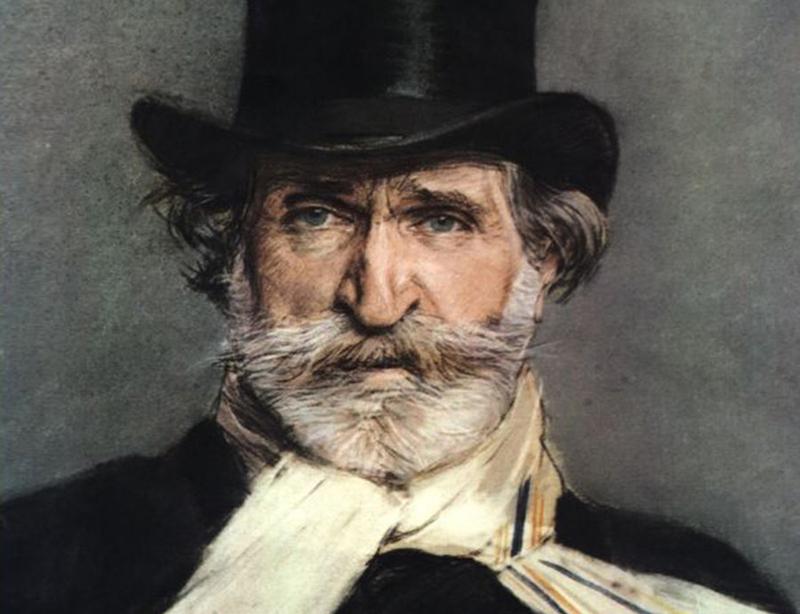
Image result for verdi


He was born near Busseto to a provincial family of moderate means, and developed a musical education with the help of a local patron. Verdi came to dominate the Italian opera scene after the era of Vincenzo Bellini, Gaetano Donizetti, and Gioachino Rossini, whose works significantly influenced him.

He struggled for success and in 1842, at age 28, it finally came with his bold new opera Nabucco, about the fall of Jerusalem in 587 B.C. While the opera is justly famous for its moving chorus "Va, pensiero" — which became a rallying cry for Italy's struggle for independence and was sung spontaneously by a few hundred thousand people at Verdi's funeral in 1901 — it should be noted that the entire opera is a forward thrusting, rollicking affair. You would not be incorrect in describing it as "ass-kicking Verdi."


It's fun to trivialize Trovatore, Verdi's 18th opera, because of its outlandish plot. The Marx brothers spoofed it magnificently (but with a palpable appreciation) in their 1935 film A Night at the Opera. OK, so an old gypsy woman throws the wrong baby into the bonfire, setting off a string of unfortunate events. It could happen to anyone! Still, Trovatore is a treasure trove of some of Verdi's best and most hummable tunes, and they come lickety-split one after another. There's the crowd-pleasing "Anvil Chorus," plus "Di quella pira," with its brain-splitting high notes for the tenor, two gorgeous arias for soprano ("Tacea la notte" and "D'amor sull'ali rosee"), the exuberant "Stride la vampa" for the mezzo-soprano and "Il balen," a gorgeous moment of reflection for the baritone.


Verdi's operas act on deeply sociopolitical levels, and La Traviata is a perfect example. Here Verdi empowers the common individual. The opera stars a prostitute — something unheard of at the time — and she's the smartest, most sane and honest person in the opera. It takes very little imagination to see how this realistic story (nice boy falls in love with hooker, who breaks up with him to save his family's honor) dovetails with our contemporary concerns. La Traviata was also an act of daring for Verdi, a little jab at the conservatives of his native Parma who balked at the fact that he wasn't married to the woman he lived with. The lead soprano role is so multifaceted and difficult it almost requires three different types of sopranos to pull it off.


By the time Verdi wrote Simon Boccanegra, he was the king of opera. Even so, Boccanegra flopped at its 1857 premiere. (Verdi revised it successfully 24 years later.) It's not too nerdy to note that whatever one thinks of the convoluted plot (a 14th century doge, amid intense political maneuvering, manages to find his long-lost daughter), the work contains examples of two Verdi trademarks: The father-daughter duet and the "Verdi baritone." Verdi excelled at richly drawn, highly expressive roles for the baritone voice (Rigoletto, Falstaff, Macbeth, Iago, Nabucco) and Boccanegra is one of the most rewarding and detailed. He also focused on father-daughter relationships and the duet "Orfanella il tetto umile" from Boccanegra's first act, when he realizes Amelia is indeed his daughter, is a two-hankie affair.


Near the end of Verdi's incredible six decades in opera, he threatened to quit, but instead came up with one fresh work after another. Finally, after some two dozen serious operas, he capped it all off with a comedy. Falstaff is witty and furiously paced but with the autumnal warmth of an old man looking back on his life with a chuckle. Falstaff's Act 3 monologue is a slice of operatic heaven. Drenched from being dumped in the river (with the laundry), Falstaff muses on his fate in a cruel world. As the wine warms his immense belly in the late afternoon sun, he's revived, and the trill of a cricket (listen for it in the music!) brings a smile. Falstaff is one of three ingenious operas (with Macbeth and Otello) Verdi based on Shakespeare. The composer ends his final masterwork with a chorus of "Tutto nel mondo è burla" — everything in the world is a joke.

Read more


Happy Birthday George Gershwin

George Gershwin wrote great songs and shows for the theatre, but he always fancied himself as a serious composer. And he was - in fact, one of the 20th century’s greatest.

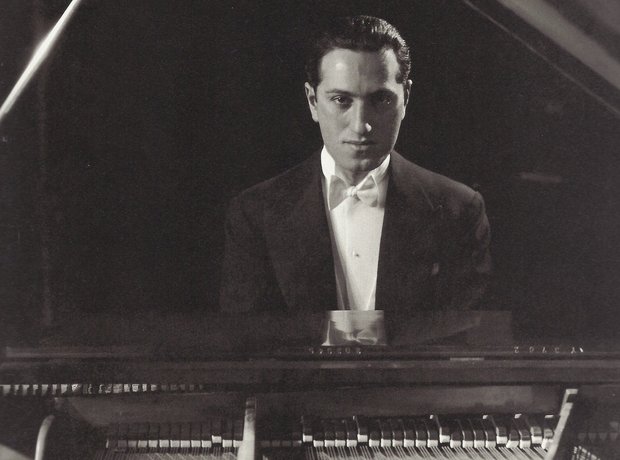
George Gershwin piano composer


George Gershwin was born in New York City into a Russian Jewish immigrant family. As a boy, George frequented the local Yiddish theatres, ran errands for them and appeared onstage as an extra. Around the age of 10, he took to playing the piano his parents had bought for his older brother Ira.

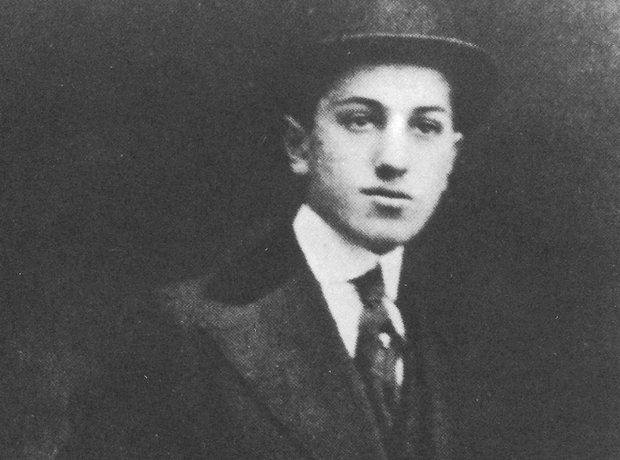
Young George GershwinThe acclaimed piano teacher Charles Hambitzer took Gershwin on at the age of 14 and immediately realized the level of talent he had on his hands. ‘I have a new pupil who will make his mark if anybody will. The boy is a genius,’ Hambitzer wrote to his sister. Gershwin was sent off to concerts and given significant pieces by the great composers to learn for the piano. Hambitzer's efforts certainly paid off.

Gershwin began his career as a song plugger in New York’s Tin Pan Alley. To earn extra, he also worked as a rehearsal pianist for Broadway singers. In 1916, he composed his first published song, ‘When You Want ’Em You Can’t Get ’Em.’ His first big hit was 'Swanee', composed in 10 minutes on a bus. Not long afterwards, the singer Al Jolson heard it and recorded it. ‘Swanee’ sold a million sheet music copies, and an estimated two million records. It became the biggest-selling song of Gershwin’s career.


In his 20s, Gershwin started composing Broadway musical theatre works with his brother Ira writing the lyrics. They even created an experimental one-act jazz opera Blue Monday, set in Harlem – a pre-cursor to Porgy and Bess. In 1924, the brothers collaborated on the stage musical Lady Be Good, which included the classic song Fascinating Rhythm. 


Gershwin's most ambitious composition was Porgy and Bess, which he called a ‘folk opera’. The action takes place in the fictional neighbourhood of Catfish Row, South Carolina. The opera contains some of Gershwin's most sophisticated music and some huge hit arias – ‘Summertime’, ‘I Got Plenty o' Nuttin'’ and ‘It Ain't Necessarily So’. When it was first performed in 1935, it was a box office flop. It is now widely regarded as one of the most important American operas of the 20th century.

After the disappointing reception for Porgy and Bess, Gershwin moved to Hollywood and worked on many film scores. His music for Shall We Dance, starring Fred Astaire and Ginger Rogers, married ballet with jazz in a new way, and ran for more than an hour in length. It took Gershwin several months to write and orchestrate it.


Early in 1937, Gershwin began to complain of blinding headaches and there were signs he was suffering coordination problems. He was diagnosed with a brain tumour. An operation was unsuccessful, and Gershwin died on 11 July at the age of 38.

From the opening clarinet glissando of Rhapsody in Blue to such standards as 'Embraceable You' and 'Someone to Watch Over Me', Gershwin's music has been part of our world for almost a century. It evokes an era of glamour and sophistication and gave the United States its first authentic voice in the concert hall. The American singer Michael Feinstein has said, 'The Gershwin legacy is extraordinary because George Gershwin died in 1937, but his music is as fresh and vital today as when he originally created it.'

Read more


Classical music inspired by the Jazz Age:


Gershwin, Rhapsody in Blue

When it comes to jazzy classical music, Gershwin's your guy. His Rhapsody in Blue from 1924 is one of the most famous examples of his unique style, from the boozy opening clarinet tune to the virtuosic piano solos throughout. It encapsulates the spirit of the Jazz Age - so much so, that Baz Lurhmann uses the piece to accompany the decadent party scene in his film adaptation of The Great Gatsby.


Copland, Piano Concerto 

"The slow blues and the snappy number". That's how Copland described the two sections of his impressive Piano Concerto, and it sums up the 1926 piece pretty perfectly. It's the ultimate example of jazz-classical fusion, both indulgent and refined in equal measure.


Gershwin, An American in Paris

Strolling through the streets of Paris in 1920s, this piece attempts to capture the sights and sounds of the city. Gershwin even brought back a few horns from Parisian taxis to add some authentic Parisian noise to the New York premier.


Weill, The Threepenny Opera

European swing, American jazz, and opera. It's all there in Weill's 1928 opera, set, unexpectedly, in Victorian London. The opening song, The Ballad of Mackie Messer, translated into English as Mack the Knife, has now become a jazz standard in its own right.

Songs from The Threepenny Opera have been widely covered and become standards, most notably "Die Moritat von Mackie Messer" ("The Ballad of Mack the Knife") and "Seeräuberjenny" ("Pirate Jenny").


Stravinsky, Piano-Rag Music

Stravinsky proved himself in the field of angular tunes and stabbing rhythms in his 1910 ballet, The Firebird. It was only a matter of time before the quirky rag-time dance got its own treatment by the composer, and the results are remarkable - it's jazzy and jarring all at once, with a menacing sense of fun.

Read more


Happy Birthday John Cage!


An American composer and music theorist. A pioneer of indeterminacy in music, electroacoustic music, and non-standard use of musical instruments, Cage was one of the leading figures of the post-war avant-garde. Critics have lauded him as one of the most influential composers of the 20th century. He was also instrumental in the development of modern dance, mostly through his association with choreographer Merce Cunningham, who was also Cage's romantic partner for most of their lives.

Born in Los Angeles in 1912, Cage studied for a short time at Pamona College, and later at UCLA with classical composer Arthur Schoenberg. There he realized that the music he wanted to make was radically different from the music of his time. “I certainly had no feeling for harmony, and Schoenberg thought that that would make it impossible for me to write music. He said ‘You’ll come to a wall you won’t be able to get through.’ So I said, ‘I’ll beat my head against that wall.'” But it wasn’t long before Cage found that there were others equally interested in making art in ways that broke from the rigid forms of the past. Two of the most important of Cage’s early collaborators were the dancer Merce Cunningham and the painter Robert Rauschenberg.


The piece 4’33” written by John Cage, is possibly the most famous and important piece in twentieth century avant-garde. 4’33” was a distillation of years of working with found sound, noise, and alternative instruments. In one short piece, Cage broke from the history of classical composition and proposed that the primary act of musical performance was not making music, but listening.

Was this man Beethoven’s ‘Salieri’?

Daniel Steibelt challenged the great composer to a duel.


The 1984 film Amadeus made Antonio Salieri practically a household word. After a couple of centuries of  relative obscurity, Salieri came to be known to moviegoers as the jealous confidant and rival of Wolfgang Amadeus Mozart.

Another musical great, Ludwig van Beethoven, also had a rival, though it’s unclear whether there is a filmmaker out there who is keen on telling his story on the silver screen.

The story of Daniel Steibelt came to light recently, thanks to an article at the website historycollection.co. Steibelt was “a German born classical pianist and composer“ who “apparently also had a huge ego because he challenged the one and only Beethoven to a musical duel in Vienna in 1800,” writes Lindsay Stidham.

Like Salieri, Steibelt achieved a modicum of success in his day. “He rose to great popularity with ‘La Coquette,’ a song he composed for Marie Antoinette,” Stidham writes. The young composer made his way to Vienna in 1800, where he first floated the idea of a duel with his fellow German composer, Beethoven, who accepted the challenge.

The city’s music patrons liked the idea of a duel between Steibelt and Beethoven. Each musician got a Prince to sponsor the idea.

The contest  took place at the home of Austrian nobleman Count Moritz von Fries. Steibelt brought along a string quintet, which performed a stormy composition, and with bravado, he improvised at the keyboard.

Beethoven, not to be outdone, picked up the sheet music from the string quintet, placed it on the piano upside down, and worked out his own improvisation on one of its themes, which he showed up to be overly simplistic. It was clearly the more inspired performance, and the gathering recognized it. Humiliated, Steibelt stormed out of the room while Beethoven was still playing, followed by his prince-benefactor.

Though Steibelt has been an obscure figure in recent years, he went on to have a fairly successful career, even writing music for Napoleon and Russian Czar Alexander I before his death in St. Petersburg in 1823.

But it’s the genius of Beethoven that has stood the test of time.


Daniel Steibelt (1765-1823) : Three Sonatas Op.51 - No.2

I. Allegro Moderato
II. Air Allemande avec Variations, Moderato

The second movement is variations on the well-known German air "Ach, du lieber Augustin".

Read more


Beethoven Suffered from Lead Poisoning

Tests confirm that Ludwig van Beethoven suffered from lead poisoning. The legendary composer, who experienced decades of illness that left him in misery for most of his life, died in 1827.

Researchers aren't sure why his lead levels were so high, but they have some ideas. "There are many possibilities," says Bill Walsh, who headed a team that studied Beethoven's hair samples and fragments from his skull at the Department of Energy laboratory in Argonne, Ill.

The composer was a wine lover, and wine at the time was known to contain high lead levels. He also drank out of a goblet made partially of lead and stayed at a spa where he drank mineral water, Walsh says. But Walsh says Beethoven may not have been exposed to higher-than-normal lead levels. The composer may have been hyper-sensitive to lead and his body may not have been able to eliminate it, Walsh says. Walsh says researchers are convinced the hair and bone samples they tested are Beethoven's because they came from two different sources and were matched by DNA tests.

The blue rise at the center of the chart shows high levels in Beethoven's bones; the red lines show much lower levels in a bone from a control subject, who lived in the same historical period.

Argonne National Laboratory

Read more


Around 1801, Beethoven began to lose his hearing. He suffered a severe form of tinnitus, a "roar" in his ears that made it hard for him to appreciate music and he would avoid conversation. Over time, his hearing loss became acute: there is a well-attested story that, at the premiere of his Ninth Symphony, he had to be turned round to see the tumultuous applause of the audience, hearing nothing. In 1802, he became depressed, and considered committing suicide. He left Vienna for a time for small Austrian town of Heiligenstadt, where he wrote the "Heiligenstadt Testament", in which he resolved to continue living through his
 art.  


As Beethoven's hearing loss worsened, he tried to improve his situation with these "hearing trumpets."  They did not work for him.

Beethoven's Ear Horns

As a result of Beethoven's hearing loss, a unique historical record has been preserved: he kept conversation books discussing music and other issues, and giving an insight into his thought. Even today, the conversation books form the basis for investigation into how he felt his music should be performed, and his relationship to art - which he took very seriously.


Read more


The Man Who Wrote Mozart's words: Librettist Lorenzo Da Ponte


Lorenzo Da Ponte Engraving by Michele Pekenino
Lorenzo Da Ponte, was a Venetian priest and poet. Da Ponte wrote the words for 28 operas by 11 composers, including three of Mozart's greatest and most beloved operas — Don Giovanni, and The Marriage of Figaro and Così fan tutte.

At certain creative junctures, even the greatest of artistic minds depend on empathetic collaborators to unlock their true potential.

Mozart, of course, composed numerous operas – a total of 22 musical dramas, to be precise – but more than 225 years after his death, it remains the realm of scholarly critical debate why he enjoyed such a prodigious, prolific run alongside Da Ponte. It cannot be a coincidence – lightning, as they, say, does not strike twice, let alone thrice.

Historically, listeners have tended to overlook Da Ponte’s contributions, characterising the Venetian wordsmith as smartly workmanlike, rather than inspired – the true genius, of course, was Mozart, his librettist a historical footnote.

Yet it remains amusing to remember that, when the pair first met in 1783, it was Mozart who was starstruck by his illustrious elder. Some seven years the composer’s senior, Da Ponte was at that time already shining among Vienna’s brightest lights. As the official poet to the Habsburg’s court theatre, he was ironically best known for composing librettos for Antonio Salieri.

Mindful of Salieri’s success, and eager to establish himself further in the same city, Mozart surmised that the key to fame was penning an Italian “opera buffa” in the same light-hearted, comic mould.

"The best thing is when a good composer, who understands the stage enough to make sound suggestions, meets an able poet, that true phoenix,” Mozart wrote around this time.

He rightly supposed Da Ponte to be his “true phoenix”, yet the librettist repeatedly rejected the advances of the impoverished composer, overworked as he was writing for better-known names. Eventually, Mozart landed on a project he would not resist. A recent audience favourite had been Paisiello’s The Barber of Seville – more famously adapted by Rossini, three decades later, based on the French play of the same name by Pierre Beaumarchais.

Despite the fact the source material was banned, Mozart convinced Da Ponte to write a libretto based on its sequel, The Marriage of Figaro. After the latter succeeded in convincing his employer, Emperor Joseph II, that the play’s “subversive” content had been cut, the pair had themselves a modest hit.

Continuing the plot from Paisiello’s work, the opera told the farcical story of how the lowly barber Figaro eventually succeeds in marrying his beloved Susanna, despite the efforts of their lewd employer Count Almaviva.

Figaro was not quite the Viennese blockbuster Mozart was hankering after, running for only nine nights in total, but it did make history in its own way. Following the opera’s May 1786 premiere, conducted at the Burgtheater by Mozart himself, the stars returned to the stage for five encores, repeating favourite musical moments from the score – leading the impatient Joseph II to issue an official decree ordering that in future no vocal piece should be performed twice at the historic hall on a single evening.


However, Figaro did prove a smash in Prague, then the second city of the Habsburg Empire, early the next year, and Mozart was promptly commissioned to write another opera. This time it was Da Ponte who had the pertinent suggestion of revisiting the centuries-old tale of Don Juan.

The dramatic potential offered by this legendary libertine was to prove an intoxicating inspiration to Mozart, with the monumental Don Giovanni artistically eclipsing even its two chronological neighbours. Blurring the conventional boundaries between comedy and drama, there was a maturity and intensity to the score, and a metaphysical gravity to the theme, which paved the way for the romantic movement to come. The conflict between masked Juan’s roguish vice and Donna Anna’s earthly righteousness, between sensualist pleasure and religious invocation, willingly subverted Mozart’s perceived role as a mere entertainer.

Following its Prague premiere in October 1787, Don Giovanni was to have a rippling effect beyond the world of music – it is said Goethe began work on his masterpiece Faust after sitting down to the opera, while philosopher Kierkegaard was lyrically moved.

“The usefulness of Don Giovanni is that it puts a stake through the heart of the chocolate-box Mozart, the car-radio Mozart, the Mozart-makes-you-smarter Mozart,” once wrote the New Yorker music critic Alex Ross. “If the opera were played in bus stations or dentists’ waiting rooms, it would spread fear. It would probably cause perversion in infants.”


The pair’s final collaboration Così Fan Tutte, another opera buffa which premiered 43 months after The Marriage of Figaro. Translated directly as 'Women are Like That', Mozart reluctantly wrote the lead role of Fiordiligi for Da Ponte’s mistress Adriana Ferrarese del Bene.


Recent research has undermined the well-worn legend that Joseph II commissioned the work. Instead, newer research supports the ironic notion that Mozart took on the project after Salieri felt unable to score a libretto – a harbinger of the further changes in favour to come.

In either case, Così Fan Tutte marks something of anomaly in Da Ponte’s oeuvre, as one of the only two original librettos from a catalogue of more than 50 which were otherwise based on existing material.

It was to prove not just his final work with Mozart, but his last contribution to the city which made his celebrity. Shortly after its premiere, at Vienna’s Burgtheater in January 1790, Joseph II passed away and, haunted by malicious rumours, Da Ponte was exiled by the succeeding monarch, Leopold II. He fled to London, where he was persecuted by debt and arrest, and later New York, where he worked variously as a grocer, a milliner, bookseller and an Italian teacher. Mozart, meanwhile, went on to write just three more operas before his death less than two years later.


Classical Works Inspired by Rain


‘I love all films that start with rain…’ writes the poet Don Paterson. But how has rain been rendered in music? Is the mood of a rainy day necessarily melancholic and disappointing or can the rhythm of a good downpour suggest something joyful or cathartic? Here are examples of how rain has been made in music. 

Chopin: Prelude Op. 28, No. 15 – ‘Raindrop Prelude’


A sudden rain shower can create both distance and intimacy. It can often induce a meditative or dream-like mood in the adult, or for the child who cannot go out to play. It is thought Chopin’s ‘Raindrop Prelude’ was indeed inspired by a dream, according to his partner George Sand’s account of the moment of composition.

In her autobiography, Sand writes that: ‘He saw himself drowned in a lake – heavy, icy drops of water falling rhythmically on his chest - and when I had him listen to the drops of water falling rhythmically on the roof, he denied having heard it. He was even angry at what I translated by the expression ‘imitative harmony.’’ 

This story is part of the mythology that surrounds the magic of this intimate, introspective piece.


Britten, Noye’s Fludde


Britten’s opera for children, Noye’s Fludde, depicts the dramatic story of Noah’s Ark. The sound of the first drops of this epic deluge is actually made and inspired by domestic objects: the china mug and the wooden spoon. 

Britten’s assistant, Imogen Holst, recalls her own involvement in this moment of experimental composition shared with Britten: ‘I had once to teach Women’s Institute percussion groups during a wartime ‘social half hour’, so I was able to take him into my kitchen and show him how a row of china mugs hanging on a length of string could be hit with a large wooden spoon.’


Debussy Estampes, ‘Jardins sous la pluie’


‘Jardins sous la pluie’ or ‘Gardens in the Rain’ is from Debussy’s Estampes for solo piano. It evokes the light and colour of a spring shower through its trembling, fluid and slightly frenetic sound. It also seems to capture the delicate quality of each raindrop through this rapidity of notes.

Pianist Stephen Hough writes that ‘Debussy’s discovery of new sounds at the piano is directly related to the physiology of hands on keyboard.’ As we are transported by the intense mood of rain communicated in this piece, we are also experiencing the physicality of the piano and the movement of fingers in a new way.


Judith Weir, The Welcome Arrival of Rain


Rain in this piece is a response to the monsoon rains returning in India, and is inspired by an extract of verse from the Hindu text, Bhagavata Purana. The piece captures the sense of sudden rain, its syncopating rhythmic energy, and the change, renewal and growth it brings. 

It also becomes a metaphor for the process of creativity itself, as Weir describes: ‘Whilst I composed it, as the notes and the pages multiplied, I began to think of a comparison with the arrival of the monsoon in India, when aridity is pierced by life-giving rain; and humans, animals and vegetation revel in sudden activity and fertility.’


 John Luther Adams, In the Rain


How does rain sound? In the Rain investigates and experiments with how we hear its changing rhythms. Adams encourages us to attend to the sonic expression of the natural world, as well how the rain encounters and catches on objects and surfaces. There is a numinous, otherworldly quality to this work.


Read more


The Composer and his Muse: Mothers

Brahms: German Requiem

While the death of his dear friend Robert Schumann provided an initial impetus for Brahms's German Requiem, the composer dedicated it to his mother, who died nine years later. The memory of Johanna Brahms is particularly apparent in the work’s fifth movement, which takes Isaiah 66:13 for its text: “As one whom his mother comforteth, so will I comfort you.”


Strauss’s “Muttertändelei” 

Any proud mama would be charmed by Richard Strauss’s “Muttertändelei” (Mother-chatter) in which a new mom brags about her angelic-looking child, with a disposition to match. Using verse from the 18th-century German poet Gottfried August Burger, Strauss wrote the piece in 1899, two years after his wife Pauline gave birth to their son Franz. Apparently Pauline was so taken with the work she would not lend the manuscript to fellow musicians.


Dvorak: "Songs My Mother Taught Me"

Dvorak’s melancholy folk melody “Songs My Mother Taught Me” is part of the Czech composer’s collection of Gypsy songs. The short melody tells of a woman passing down the songs she learned to her own children. It was an immediate hit when Dvorak composed it and still remains one of his best-known melodies.


Webern: Six Pieces for Orchestra

Though Anton Webern dedicated his Six Pieces for Orchestra to his teacher, Arnold Schoenberg, the works attempt to sort out his emotions from his mother’s recent death. "The first piece is to express my frame of mind when I was still in Vienna, already sensing the disaster, yet always maintaining the hope that I would find my mother still alive,” wrote Webern. The subsequent miniatures express the composer’s grief and also joyous memories with his mom.


Barber: Knoxville Summer of 1915

Samuel Barber’s destiny towards becoming a composer seems to have been cemented in a prophetic letter the nine-year-old composer wrote to his mother, begging her to let him make music rather than playing football (“I have written to tell you my worrying secret...I was meant to be a composer, and will be I’m sure”). While Barber dedicated his orchestral suite, Knoxville Summer of 1915, to his father (as did its original author, James Agee), the piece tenderly describes a mother “who is good to me.”


Happy Easter


It’s Easter, and whether you believe in the story surrounding the holiday or just looking to crack some Easter eggs, one thing is true – it’s a time associated with some great musical works. In fact, if you’re into classical music, you would realize that some of the best compositions are associated with the messages of this time of the year.

From oratorios by Bach to ballets by Stravinsky, there are musical masterpieces that have continued to draw crowds at public performances around the world, as well as served as sources of comfort for minds looking for musical relaxation and reflection during Easter. With that said, here are five of the best classical pieces to listen to this Easter. Enjoy!

Easter Oratorio by J.S. Bach – 1725-46

Based on the resurrection story, this is an Easter favorite for many who follow closely the Easter tradition. It was written for a Lutheran church service by the master composer and has been a mainstay of many of today’s Easter performances to be led by famous conductors, such as Sir Jon Eliot Gardiner.


The Seven Last Words of Christ on the Cross by Joseph Haydn – 1783-96

Regarded by many classical aficionados as an epic orchestral composition, this piece by Haydn represents the last words to be uttered by Christ on the cross before he gave up the ghost. It was originally created to be interspersed by seven readings during Easter service.


Symphony No 2, “Resurrection” by Gustav Mahler – 1888-1894

While not exactly about Christ’s resurrection, this piece was considered to be one of the greatest works by Gustav Mahler. A rousing, thought-provoking number, Mahler got the idea for this symphony after the funeral of a fellow musician and friend got him thinking about the afterlife. Today, it remains among Easter audience favorites.


The Mystery Sonatas by Heinrich Ignaz Franz Biber – 1678

Written for his employer, Biber composed this piece to be made up of 15 short sonatas related to a part of the Rosary Devotion of the Catholic Church. A renowned violin virtuoso, Biber’s skill brings the Rosary’s 15 meditations (on mysteries surrounding the life of Christ and Mary) to life in stunning fashion. It’s a reflective piece, hence why it is still an Easter favorite.


Messiah by George Frideric Handel – 1741

The longest on this list, “Messiah” is a favorite piece for well-known orchestras around the world, especially at Christmas. Its popularity during the Yuletide season is due to the fact that the first section of this masterpiece deals with the birth of Christ. However, the rest of the composition covers the death and resurrection, which is why it was originally launched as an Easter performance. It includes the well-known “Hallelujah,” which is just one of the many reasons why audiences around the world can’t get enough.


Read more


Wolfgang Amadeus Mozart and Joseph Haydn

The composers Wolfgang Amadeus Mozart and Joseph Haydn were friends. Their relationship is not very well-documented, but the evidence that they enjoyed each other's company and greatly respected each other's work is strong, and suggests that the elder Haydn acted in at least a minor capacity as a mentor to Mozart.


Haydn was already a fairly well-known young composer in Mozart's childhood. His six string quartets Opus 20 (1772), called the "Sun" Quartets from the drawing of the sun on the cover of the first edition, were widely circulated and are conjectured (for instance, by Charles Rosen) to have been the inspiration for the six early string quartets K. 168–173 the 17-year-old Mozart wrote during a 1773 visit to Vienna.


The two composers, a generation apart, met in Vienna around Christmas of 1783 at a performance sponsored by the Vienna Tonkünstler-Societät, a charitable organization for musicians. On the program were works by both Haydn (Jones: "a symphony and a chorus, both probably from [the oratorio] Il ritorno di Tobia") and Mozart ("a new concert aria, probably 'Misero! o sogno!' [K. 431], and, on the first night, a piano concerto").


After sensing a great kinship of spirit, they moved quickly across the concentric circles of platonic relationships and arrived at the center of a deep friendship. Having already admired Haydn for years and even considered him his teacher, Mozart composed six string quartets dedicated to his friend and hero.

Haydn last saw Mozart in the days before he departed for London in December 1790.  Haydn, still in London a year later when the news of Mozart's death reached him, was distraught; he wrote to their mutual friend Michael Puchberg, "For some time I was quite beside myself over his death, and could not believe that Providence should so quickly have called away an irreplaceable man into the next world". Haydn wrote to Constanze Mozart offering musical instruction to her son when he reached the appropriate age, and later followed through on his offer.


Source Wikipedia


Happy Birthday Joseph Haydn


Born on March 31, 1732 in Rohrau, Austria, Franz Joseph Haydn's father was a wheelwright, his mother a former cook. The second child of his parents, Haydn began to display musical talent early on in life, wanting to give him the training he needed, his parents agreed to let their cousin, a principal and choirmaster in Hainburg, take Haydn to the school at age six.

Haydn's experience in Hainburg was good for his musical abilities, but bad for his soul. The young boy was often left without much to eat during his time there, and was not given the same love he might have received from his parents.  When the musical director of a church in Vienna offered to take Haydn as a chorister at age eight, his parents accepted.

Haydn spent nine years at St. Stephen's Cathedral in Vienna, but when his voice changed, he was expelled from the school. Haydn began doing odd jobs to make money, and taught himself music theory, eventually he worked his way up to becoming the musical director for count Ferdinand Maximilian von Morzin. It was in this position that he composed his first symphony.


Haydn's wife Anna. Unauthenticated miniature attributed to Ludwig Guttenbrunn (Burgenländisches Landesmuseum)

In 1760 he married Maria Anna Aloisia Appolonia Keller, they never had children. A year later, Haydn became assistant music director for Esterhazy family, his kindness to the staff and good nature here earned him the title "Papa" by many of the musicians and later earned him the post of musical director.

As a "house officer" in the Esterházy establishment, Haydn wore livery and followed the family as they moved among their various palaces, most importantly the family's ancestral seat Schloss Esterházy in Eisenstadt and later on Esterháza, a grand new palace built in rural Hungary in the 1760s. Haydn had a huge range of responsibilities, including composition, running the orchestra, playing chamber music for and with his patrons, and eventually the mounting of operatic productions. Despite this backbreaking workload, the job was in artistic terms a superb opportunity for Haydn. The Esterházy princes (Paul Anton, then from 1762–1790 Nikolaus I) were musical connoisseurs who appreciated his work and gave him daily access to his own small orchestra. During the nearly thirty years that Haydn worked at the Esterházy court, he produced a flood of compositions, and his musical style continued to develop.


FRANZ JOSEPH HAYDN, THE VIOLINIST SIMON, AND MEMBERS OF THE ESTERHAZY FAMILY

1779 was a watershed year for Haydn, as his contract was renegotiated: whereas previously all his compositions were the property of the Esterházy family, he now was permitted to write for others and sell his work to publishers. Haydn soon shifted his emphasis in composition to reflect this (fewer operas, and more quartets and symphonies) and he negotiated with multiple publishers, both Austrian and foreign. His new employment contract "acted as a catalyst in the next stage in Haydn's career, the achievement of international popularity. The new publication campaign resulted in the composition of a great number of new string quartets (the six-quartet sets of Op. 33, 50, 54/55, and 64). Haydn also composed in response to commissions from abroad: the Paris symphonies (1785–1786) and the original orchestral version of The Seven Last Words of Christ (1786), a commission from Cádiz, Spain.


Wolfgang Amadeus Mozart who Haydn had met sometime around 1784 were good friends and according to later testimony by Michael Kelly and others, the two composers occasionally played in string quartets together. Haydn was hugely impressed with Mozart's work and praised it unstintingly to others. Mozart evidently returned the esteem, as seen in his dedication of a set of six quartets, now called the "Haydn" quartets, to his friend. In 1785 Haydn was admitted to the same Masonic lodge as Mozart, the "Zur wahren Eintracht [de]" in Vienna.


Haydn spent his last twelve years in the "Haydn house" in Vienna's sixth district, composing important late works including "Die Schoepfung" (The Creation) and "Die Vier Jahreszeiten" (The Seasons), where he died in 1809 at the age of 77.


Source Wikipedia

Happy Birthday George Frideric Handel

George Frideric Handel (1685-1759) Born the same year as Johann Sebastian Bach and Domenico Scarlatti, Handel is regarded as one of the greatest composers of the Baroque era, with works such as Messiah, Water Music, and Music for the Royal Fireworks remaining steadfastly popular.

He is consistently acknowledged as one of the greatest composers of his age. He contributed to virtually every vocal and instrumental genre in his time, and decisively invented and shaped the evolution of the English oratorio. Handel consolidated the main European styles of his day, always relying on his extraordinary gift for melody. There is mysterious simplicity in Handel’s music, one that marries sensuousness and the spiritual. Frequently probing “the human response to the divine,” his music is illuminated with a great sense of humanity. For Ludwig van Beethoven, “Handel was the greatest composer that ever lived.” As such it is hardly surprising that Beethoven would pour his veneration into a set of variations based on one of Handel’s most famous tunes.


The Harmonious Blacksmith is the popular name of the final movement, Air and variations, of George Frideric Handel's Suite No. 5 in E major, HWV 430, for harpsichord. This instrumental air was one of the first works for harpsichord published by Handel. One of the enduring mysteries of classical music as to why and how the final movement of Handel’s Suite No. 5 for harpsichord acquired the nickname “The Harmonious Blacksmith.” The name certainly did not originate with Handel, and seems to have been first recorded in the early 19th century. One popular legend suggests that Handel once took refuge from a thunderstorm in a smithy, and upon hearing the hammer on the anvil was inspired to write the tune. It’s a good story, but sadly, it originated almost 75 years after Handel’s death. And then there is William Lintern, a blacksmith’s apprentice from Bath who later took up music and published the work under his own nickname, “The Harmonious Blacksmith.” This inspirational story also runs into some authentication problems, but the tune certainly achieved a high degree of popularity.  Read more


In August 1750, on a journey back from Germany to London, Handel was seriously injured in a carriage accident between The Hague and Haarlem in the Netherlands. In 1751 one eye started to fail. The cause was a cataract which was operated on by the great charlatan Chevalier Taylor. This did not improve his eyesight, but possibly made it worse. He was completely blind by 1752. He died in 1759 at home in Brook Street, at age 74. The last performance he attended was of Messiah. Handel was buried in Westminster Abbey. More than three thousand mourners attended his funeral, which was given full state hon ours.  Read more


Happy Birthday Pablo Casals

Pau Casals i Defilló was born 29 December 1876, usually known in English as Pablo Casals, was a cellist, composer, and conductor from Catalonia, Spain. He is generally regarded as the pre-eminent cellist of the first half of the 20th century, and one of the greatest cellists of all time. He made many recordings throughout his career, of solo, chamber, and orchestral music, also as conductor, but he is perhaps best remembered for the recordings of the Bach Cello Suites he made from 1936 to 1939. He was awarded the Presidential Medal of Freedom in 1963 by President John F. Kennedy (though the ceremony was presided over by Lyndon B. Johnson).


The man who would become the world's greatest cellist never heard one until age 11. By then he was an accomplished singer, pianist, violinist and (once his feet could reach the pedals) organist.

Three years earlier, when he had been enthralled by a street performer on a makeshift upright bass consisting of a bent broom handle with a single string, his father made him a crude replica from a gourd. (As a reminder of his humble origins, Casals kept it displayed in his home all his life). When Casals finally heard a cello in a trio visiting his remote Catalan village, its sound stirred him as human and profound.

Until then, the cello was deemed unsuitable for sensitive displays of emotion and was typically relegated to a role of accompaniment (as when chugging along with Baroque music). "Proper" technique of the time stemmed from strict training in which a student was made to hold a book under his bowing arm to restrict movement and to produce an unvarying tone. From his earliest lessons, Casals rebelled and resolved to liberate the cello from its chaste subordinate chore. Casals revolutionized bowing technique by using only portions rather than the entire expanse of the bow, lifting it from the strings and shading the tonal quality to emphasize the musical essence. He also pioneered percussive fingering (stopping the strings decisively rather than sliding the whole hand between notes),One of Casals' first Columbia 78s expressive intonation (varying the tuning according to harmonic demands), rhythmic vigor, varied attacks and decisive accentuation. His innovations bred interpretations having a compelling inner logic and an instinctive feeling for structure and meaning. Casals created a sense of style.

Throughout his career, Casals never forgot his roots and remained immersed in his deep abiding love of mankind. Rather than cater to the elite, Casals believed that the people who had produced a country's wealth should share its cultural riches. With his Barcelona orchestra, he launched wildly popular concert series to which only low-paid workers were eligible to subscribe (for six pesetas – about $1 – for an entire season) and insisted that their acclaim "meant more to me than any applause I had ever received."

Read more


Lili Boulanger: the fragile, forgotten genius of classical music

Lili Boulanger was one of the most exciting composers of the early 20th century, until her tragically early death at the age of 24. 


 Lili Boulanger was a child prodigy 

Marie-Juliette Olga (Lili) Boulanger was born on 21 August 1893. When she was just two the great composer Gabriel Fauré – a friend of the family – spotted that she had perfect pitch. At the age of two she also contracted bronchial pneumonia. She survived, but the illness left her immune system weakened for the rest of her life. 

She came from musical – and royal – stock 

Her mother was a Russian princess who fell in love with, and eventually married, her Paris Conservatoire teacher Ernest Boulanger and both her grandparents (on the Boulanger side) had been musicians. Lili herself played (deep breath) piano, violin, cello, harp and organ. Oh and she sang. 

She was the first woman to win the Prix de Rome 


Photo: Lili with composers (L) Claude Delvincourt, Lili Boulanger, (R) Marc Delmas and Edouard Mignan.


The Prix de Rome was the most prestigious honour for artists. It was a prize, first awarded in the 17th century, that allowed the winner to live in Rome for three to five years, all expenses paid. In the 19th century it was awarded to a composer for the first time. In 1913 Lili Boulanger became the first woman to win the Prix de Rome… though the judges couldn’t quite bear to let her enjoy the honour on her own. So they also awarded first prize that year to Claude Delvincourt. 


She wrote her cantata Faust et Hélène in just 4 weeks


It’s the piece that gave the Prix de Rome judges no choice but to give her the award. The rules of the competition stated that the piece had to be written in four weeks. So that’s what the precocious 19-year-old Lili did. It’s 30 minutes long and is written for a full orchestra. It tells the story of Faust, the man seduced by the power offered by Mephistopheles. And the music Boulanger uses to tell the story sounds Wagnerian, with hints of Debussy. It’s no surprise it won the most prestigious prize of the day. 

She was famous for her use of harmony 

In her own time she was noted for her lush harmonies, instrumentation and elegant text setting. Try this eerie setting of Psalm 130, ‘Du fond de l’abime’ (also known as De Profundis, or in English ‘Out of the depths’) 


Her final work is a beautiful Pie Jesu 

Lili was 24 when she wrote this piece. She dictated the piece to her sister from her sick bed. The text asks Jesus to grant someone ‘everlasting rest’. She died shortly afterwards. 


Nadia found a new calling 


Her sister Nadia was so affected by Lili’s death that she stopped composing and turned her attention to teaching. She went on to become one of the most renowned teachers of the 20th century and taught composers including Aaron Copland, Elliott Carter, Thea Musgrave, Leonard Bernstein and Philip Glass. 

Here she is with Leonard Bernstein, composer of West Side Story and Candide. (Picture Getty) 

And Lili’s star lives on 

Lili may have only lived for 24 short years, but there are plenty who admire her music – including the jazz pianist Herbie Hancock, who calls her one of his favorite composers. This year marks the centenary death. Perhaps 2018 will be the year her genius gets the attention it truly deserves. 

Read more


In Daddy’s Footsteps! Franz Xaver Mozart

Rather predictably, the deciphering of the human genome has done little to provide conclusive answers to questions regarding musical talent and ability. Although we have learned that certain genes control unique sites in the brain, which in turn determine levels of pitch perception, we are also aware that encouragement, nurture, and training represent significant factors. 

Leopold Mozart was much determined to foster Wolfgang Amadeus’ natural abilities, and Constanze Mozart made sure that her son Franz Xaver Mozart (1791-1844) studied with the best teachers in Vienna. Of course you know that Wolfie married Constanze Weber, who also came from a highly talented musical family at home in Mannheim. You might not know, however, that the couple had 6 children, with only 2 surviving into adulthood. Karl Thomas Mozart, who entered into the service of the Viceroy of Naples in an administrative capacity, was never really interested in music at all. He remained unmarried and childless. And there was Franz Xaver Wolfgang Mozart, who was only four months old when his father died.

But then, we really can’t be sure who was actually the boy’s father. “Franx Xaver” had been the first names of Mozart’s student Süssmayr — the one who put the finishing touches on the Requiem — and when Wolfie passed away, Constanze changed the boy’s name to “Wolfgang Amadeus Mozart (Sohn).” No wonder Vienna was buzzing with rumors that Süssmayr might actually have been the biological father. Be that as it may, Franz Xaver received his early musical education from the Mozart student Johann Nepomuk Hummel, and from Georg Friedrich Albrechtsberger, who had taught Haydn and Beethoven. Antonio Salieri suggested, “the boy has a rare talent for music, and his future might not be inferior to that of his celebrated father.”


Franz Xaver with elder brother Karl Thomas
Of course, it was always going to be slightly difficult to fill his father’s musical shoes. Franz Xaver was certainly a gifted pianist who toured extensively through the German speaking parts of Europe, but also in Denmark, Russia and Italy, and then spent most of his life as a private music tutor in the Ukraine. He also remained unmarried and had no children, so that particular musical lineage sadly disappeared. 

In terms of personality, Franz Xaver was very unlike his father. He was introverted, constantly underrated his own talent and feared that whatever he composed would be compared to the compositions of his father, and of course, it was. His father’s shadow even followed him after his death. On his tombstone we can read, “May the name of his father be his epitaph, as his veneration for him was the essence of his life.”


Franz Xaver composed about 30 compositions, assorted Sonatas, some chamber music and 2 piano concertos, with his music remaining stylistically firmly in the mature musical style of his father. Franz Xaver was never going to be able to escape the shadow of his father, but both composers were born with exceptional musical talent and aptitude into a fertile environment that recognized, encouraged and nurtured that particular talent. And as Wolfie told us, that’s really all that matters!

Read more